



Polarized Sunglasses Meaning, Functions, Benefits and Applications
Published on October 15th, 2024
Updated on February 5th, 2025
 Canada
Polarized sunglasses are types of sunglasses designed to protect the eyes from UV radiation and to reduce glare. Polarized sunglass lenses work by having a coating or filter that stops horizontal light, the type of light that causes glare, getting through the lens to the eye, in turn lessening the effects of glare. Polarized sunglasses are beneficial for those who spend an extended period of time in high-glare environments, such as those who boat, fish or are in the snow. The advantages of polarized sunglasses include their ability to reduce glare, improve vision clarity, reduce eye strain and protect the eyes from the elements. The disadvantages of polarized lenses are that they are not suitable for use at night or in dim light conditions, make seeing LCD or LED screens difficult and can be more expensive than regular sunglasses.
What are Polarized Sunglasses?
Polarized sunglasses are a type of eyewear with lenses designed to reduce glare. Polarized sunglass lenses are coated in a material or filter that cuts how much horizontal light enters through the lens, which can in turn reduce eye strain and improve sight in high-glare environments such as when driving, in snowy conditions or when near a body of water. Polarized sunglasses typically provide UV protection, like many other types of sunglasses. However, it’s important to check that your lenses provide UV 400 for 100% UV protection as polarized lenses themselves do not block UV. At Oscar Wylee, all of our lenses feature UV 400 protection so you can be sure that you’re receiving the highest level of protection. UV rays are a type of light emitted from the sun. UV light can be harmful to the eyes if they are exposed to it for prolonged periods.
How Do Polarized Sunglasses Work?
Polarized sunglasses work by reducing the amount of horizontal light that hits the eye, helping to reduce glare. According to the American Academy of Ophthalmology, the chemicals in a polarized tint or coating are aligned in a way that only lets vertical light in, meaning horizontal light that is bounced off of surfaces such as water and snow is filtered out by the lens reducing glare.
What are the Benefits of Polarized Sunglasses?
The advantages of polarized sunglasses include their ability to reduce glare, protect the eyes from UV rays, improve vision clarity, reduce eye strain, and protect the eyes from the elements. The advantages of polarized lenses are listed below.
- Reduce glare: Polarized lenses are designed to reduce glare, which is one of their biggest benefits. Polarized lenses will reduce glare from surfaces such as water and snow.
- Protect the eyes from UV rays: Protecting the eyes from UV rays is one of the biggest benefits of polarized sunglasses. Like most sunglasses, polarized sunglasses are designed to help protect the eyes from UV rays emitted from the sun. UV can be harmful to the eyes if they are exposed to it for long periods of time.
- Improved vision clarity: Improved vision clarity is one of the biggest benefits of polarized sunglasses. Polarized sunglasses may allow for greater colour contrast and clearer vision in bright light.
- Reduce eye strain: Polarized sunglasses help reduce eye strain that can be caused by extended periods of time in bright light which is one of their major benefits.
- Protect the eyes from the elements: Protecting the eye from the elements is one of the major benefits of polarized sunglasses. Polarized sunglasses that fit the face well should help protect the eyes from potentially damaging or irritating elements such as wind and sand as they provide a barrier in front of the eyes.
What is the Difference Between Polarized Sunglasses and Regular Sunglasses?
The difference between polarized sunglasses and regular sunglasses is their lens types and purpose. Polarized sunglasses are sunglasses in which a polarized laminated sheet is applied to the lens to help cut glare. Sunglasses is an umbrella term that refers to many different types of sunglasses, primarily designed to protect the eyes from the sun and UV rays. Sunglasses can have polarization added to the lens, which would make them polarized sunglasses, but not all sunglasses will have this feature. Some sunglasses can have tinted or mirrored lenses. It is important to check what protection sunglasses provide before buying them, to make sure you are getting the glasses that are appropriate for your eye care needs. The answer to what are polarized sunglasses is sunglasses that have had polarization added to the lens.
Do Polarized Sunglasses Block Glare?
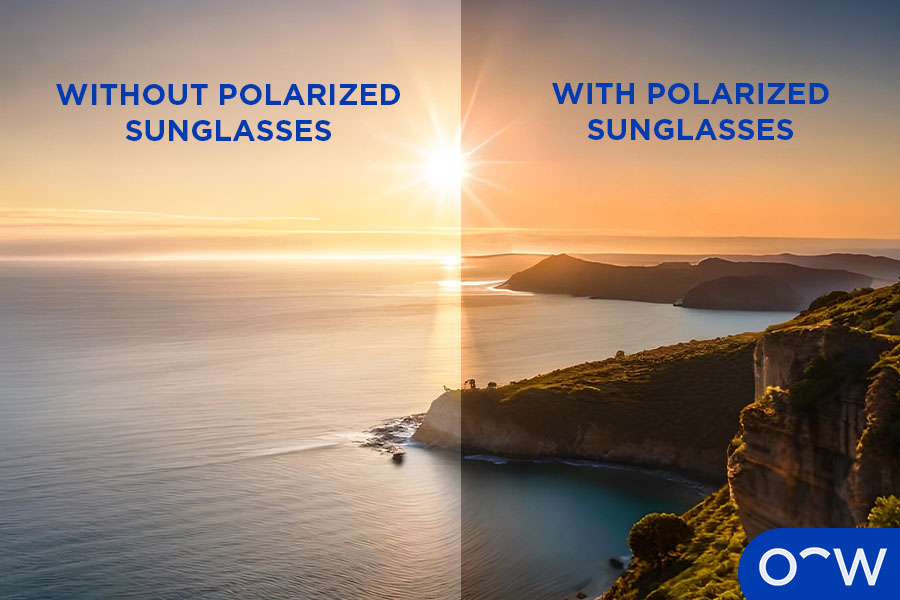
Yes, polarized sunglasses block glare. Glare is defined as a strong light or very bright light. Glare is typically reflected off of smooth surfaces such as water or snow. To block glare, polarized sunglasses are coated in a material or filter that cuts how much horizontal light enters through the lens.
How to Tell if Sunglasses Are Polarized?
There are several ways to know if sunglasses have polarized lenses. The first way to know if glasses are polarized is to hold them up to a computer or phone screen at a 60 to 90-degree angle. Polarized lenses should make LED or LCD screens look dark and hard to see. If the phone screen is dark, then the lenses are likely polarized. Another way to know if glasses are polarized is to find a surface with glare, such as water, and assess whether the glare from these surfaces is reduced when the glasses are on. If they are, the glasses likely have some polarization over the lenses.

What are Polarized Sunglasses Used For?
Polarized sunglasses can be used in most situations in which there will be bright light or high levels of glare, and many people use polarized sunglasses during their normal, everyday activities outside. However, polarized sunglasses can be of particular benefit in the snow, whilst driving during the day and fishing. The ways and activities in which polarized sunglasses can be used are listed below.
- Snow: Snow can be a highly reflective surface, so any snowy environment is a good place to use polarized sunglasses.
- Driving during the day: Driving during the day is another activity in which polarized sunglasses are of good use as roads can be a source of glare.
- Fishing: Fishing is another activity in which polarized sunglasses will be of benefit as the surface of water can be a major source of glare.
Are Polarized Sunglasses UV Protected?
Yes, most polarized lenses will have UV protection. UV light refers to ultraviolet rays that are emitted from the sun that can be damaging to the eyes after long-term exposure. Whilst most retailers add UV protection to their polarized sunglasses or lenses, it is always important to check the protection offered by a pair of sunglasses before buying them. At Oscar Wylee, all of our polarized glasses have UV protection.
When to Wear Polarized Sunglasses?
Polarized sunglasses are designed to be used in any situation or environment in which there is a high level of glare, such as when boating or fishing, when driving, or in snowy conditions. The purpose of polarized sunglasses is to cut glare from reflective surfaces, meaning they should be worn in situations or environments where a high level of glare is present which often includes bodies of water or snow. People often wear polarized lenses when outside in the sun for extended periods and when doing activities such as fishing, golfing, skiing or driving.
Can Polarized Sunglasses Reduce Eye Strain?
Yes, polarized sunglasses may help to reduce eye strain caused by being in bright light for extended periods. A person may find themselves squinting or straining their eyes to see properly if they are in high levels of glare or bright light. Sunglasses can help with this strain by limiting how much glare reaches the eye.
Who Should Use Polarized Sunglasses?
The people who should use polarized sunglasses are those who spend extended periods of time outside in the sun or in situations with high levels of glare. Anyone can use polarized sunglasses as they are a hugely beneficial piece of eyewear that can make it easier to see in high-glare situations. People who go boating, fishing, or spend time in snowy environments may find benefits in using polarized glasses as these are high-glare situations.
Do Polarized Sunglasses Work at Night?
It is not recommended to wear polarized lenses at night as the darkened lens will obscure vision in certain situations such as night driving. Polarized lenses are appropriate to wear during the day, or in the sun, however, it is best to remove them if you are out walking or driving at night as the lenses are dark and can impact how well you can see objects.
How Can Polarized Glasses Block Blue Light?
Polarized sunglasses are not specifically designed to block blue light. While they may reduce some blue light exposure due to the filtering of certain light waves, they are not a substitute for blue light-blocking glasses. The purpose of polarized glasses is to reduce glare by cutting the amount of horizontal light that enters through a lens, instead of only allowing for vertical light to enter. According to Total Vision and the National Library of Medicine, polarized glasses can potentially block a certain amount of blue light by reducing the amount of horizontal light that enters a lens, however, the exact amount and effectiveness of this is not known as this is not the primary focus of the glasses. Whilst it is up for debate to what degree polarized glasses block blue light, there are some blue light-blocking glasses designed to help reduce the amount of blue light that enters the eye.
What are the Disadvantages of Polarized Sunglasses?
The disadvantages of polarized sunglasses are that they are unsuitable for use at night or in dim light conditions, make seeing LCD or LED screens difficult and can be more expensive than regular sunglasses. The disadvantages of polarized sunglasses are listed below.
- Unsuitable for use at night or dim lighting conditions: Lack of suitability for use at night or in dim lighting conditions is a disadvantage of polarized sunglasses. Polarisation is often dark and can make dim or dark light look even darker, potentially obscuring vision.
- Make seeing LCD or LED screens difficult: Polarized sunglasses can make looking at digital screens difficult, which is one of their biggest disadvantages. Polarized lenses can make screens look very dark or even blank.
- More expensive than regular sunglasses: Polarized sunglasses tend to be more expensive than regular sunglasses because of the chemicals and the coating, which can be a disadvantage to some people who want a more cost-effective frame.
How are Polarized Sunglasses Made?
The way polarized sunglasses are made will differ depending on the brand or manufacturer but will generally involve adding a special chemical coating or filter to a glasses lens. The process of making polarized lenses usually begins with a plain lens, in which the polarization is a heated PVA material. PVA refers to polyvinyl alcohol which is a synthetic polymer. According to the American Academy of Ophthalmology, the molecules in the chemical are lined up to reduce horizontal light from surfaces such as roads, water or snow, from entering the lens, in turn reducing glare. At Oscar Wylee, our lenses are made with premium engineered polymers and formed under strict quality-controlled conditions. Our polarization is added to these lenses as a coating, for an additional price.
Are Polarized Sunglasses Effective for Driving?
Yes, polarized sunglasses are generally effective in reducing glare and protecting the eyes from UV rays during the day, but shouldn’t be worn for driving at night or in dim light conditions. Whilst driving in low light conditions such as indoors or at night, the darker lenses may obscure vision and make it difficult to see. Polarized lenses also make it hard to see digital screens such as phone screens or computer screens.
Can You Polarize Regular Sunglasses?
You can generally polarize most pairs of regular sunglasses, depending on the retailer. At Oscar Wylee, some of our sunglasses come with polarization, otherwise, a person must inform our team that they wish to have polarization at the point of purchase, so this can be added. Added polarization at Oscar Wylee will incur an extra cost.
Can People with Astigmatism Use Polarized Lenses?
Yes, people with astigmatism can use polarized lenses if they are fitted with the appropriate prescription. Astigmatism is a refractive error in which issues with the curvature of the eyeball disrupt how light hits the retina part of the eye. Astigmatism can cause symptoms including blurry vision at near, far or intermediate distances. Prescription glasses can be used to help correct the vision issues caused by astigmatism. People with astigmatism can use polarized lenses if the lenses have been fitted with their prescription to correct astigmatism and allow them to see better.
Can People with Nearsightedness Use Polarized Lenses?
Yes, people with nearsightedness can use polarized lenses if the lenses have a person’s prescription in them. Nearsightedness, also known as myopia, is a type of refractive error in which light hits before the retina, as opposed to on the retina as is normal, leading to issues with distance vision. Concave prescription lenses can help correct nearsightedness by directing light back onto the retina. A person with nearsightedness can use polarized lenses if the lenses carry their prescription to correct this refractive error.
Can Polarized Lenses be Used as Prescription Glasses?
Polarized lenses can not be used as prescription glasses as polarization does not carry a prescription or power to help correct refractive errors. Prescription lenses refer to lenses with a prescription or power that help correct vision issues caused by refractive errors, including myopia or nearsightedness. Whilst polarized lenses are not generally prescription, at Oscar Wylee, we can add polarization to prescription sunglasses for an additional price, so our customers can correct their refractive error and reduce glare at the same time.
What is the Difference Between Polarized Glasses and UV Protection Glasses?
The difference between polarized glasses and UV protection glasses is their primary purpose or use. Polarized sunglasses are designed to filter light and reduce glare. Polarized lenses are manufactured with a chemical film either applied onto the lens or built into the lens material. UV protection glasses are glasses with either UV protection embedded in the material of the lens or coated over the lens. UV protection glasses help to protect the eyes from UV rays from the sun. UV rays can be detrimental to the eyes if they are exposed for prolonged periods. Most polarized sunglasses will typically have UV protection, but not all sunglasses will have polarized lenses. It's important to check with the retailer you are buying glasses from to determine what the main purpose of your sunglasses is.
Polarized vs. Non-polarized Sunglasses
Polarized and non-polarized sunglasses are both good eyewear choices, each with its own benefits and disadvantages. Non-polarized sunglasses can be effective in shielding your eyes from UV rays emitted from the sun. Non-polarized sunglasses can come with lenses that are tinted or mirrored. Non-polarized sunglasses won’t be as effective in cutting glare as polarized sunglasses are but are still important eyewear pieces as they will protect the eyes from the sun. Polarized sunglasses also help protect the eyes from UV rays and the sun, but also have the added benefit of protecting the eyes from glare.
Read Polarized Sunglasses Meaning, Functions, Benefits and Applications in other Oscar Wylee regions and their languages.
Canada