


Bandage Contact Lens (Therapeutic Contact Lenses): Types, Benefits and Risks
Published on July 16th, 2026
 Canada
Bandage contact lenses (therapeutic contact lenses) are a type of contact lens that can be worn post-surgery, disease, or injury to help heal or protect the cornea. Patients may only need to wear bandage contact lenses for a short period until their condition improves. Therapeutic contact lenses are commonly utilized in the management of many different corneal surface diseases and function by providing a clean and comfortable environment for the cornea to properly heal. The cornea is the clear outer layer of the eye that prevents germs or debris from entering the eye and is responsible for the refraction of light that enters the eye, according to The Canadian Association of Optometrists. It is important to note that Oscar Wylee does not offer contact lenses or bandage contact lenses.
What are Therapeutic Contact Lenses?
Therapeutic contact lenses are contact lenses that are worn to help alleviate pain, support recovery, and protect the cornea after surgery, an injury or disease. Therapeutic contact lenses work by creating an optimal environment for the cornea to heal properly.
How Do Bandage Contact Lenses Work For Corneal Abrasion?
Bandage contact lenses work for corneal abrasions as they protect the corneal lens from environmental conditions and maintain the integrity of newly forming epithelial cells. Bandage contact lenses are considered a helpful tool in healing impaired corneal tissue and alleviating pain and discomfort, especially after eye complications including corneal abrasions.
How Can Therapeutic Contact Lenses Work for Blepharitis?
Since blepharitis is an inflammatory lid margin disease, bandage contact lenses are not the standard treatment for blepharitis alone, where options like lid cleansers and topical medications are more effective. However, if the cornea becomes involved, a healthcare professional may recommend them as a mechanical barrier to maintain moisture, promote epithelial healing, and provide pain relief. Therapeutic contact lenses remain a useful method for managing complex corneal irregularities and post-surgical visual rehabilitation, according to Keratoconus Canada.
How to Apply Bandage Contact Lenses?
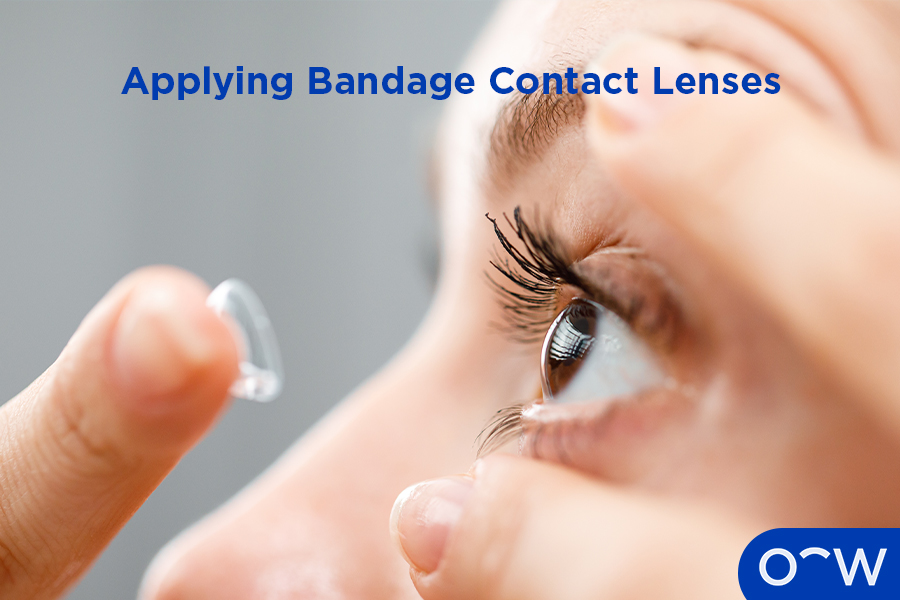
To apply bandage contact lenses, you can follow steps such as washing your hands, placing the bandage contact lens on the point of your index finger, holding your upper eyelid open, placing the bandage contact lens in your eye and closing your eyes. Applying bandage contact lenses is a similar process to inserting regular contact lenses in the eye and should be an easy and painless process if you've used contact lenses before. However, it is important to note that it is often the practitioner who will insert the bandage contact lens as your eye and vision may be compromised. The steps on how to apply bandage contact lenses are listed below.
- Wash Your Hands: Wash your hands first before touching your eyes and holding the bandage contact lens to prevent any possible bacteria from contaminating your eyes or the contact lens.
- Place the Bandage Contact Lens on the Point of Your Index Finger: Place the bandage contact lens on the point of your index finger or middle finger of your dominant hand.
- Hold Your Upper Eyelid Open: Hold your eyelid open with one hand while holding the bandage contact lens in the other hand.
- Place the Bandage Contact Lens in Your Eye: Place the bandage contact lens in your eye carefully while either looking straight ahead or up towards the ceiling.
- Close Your Eyes: Close your eyes slowly and roll them in a full circle to help them sit properly in place. Then open your eyes and gently blink a few times.
Bandage contact lenses are typically inserted and removed exclusively by your eye care professional in a clinical setting. The application guide above is provided for educational purposes only, or for patients with chronic, recurrent conditions who have been explicitly trained and authorised by their managing practitioner to handle their lenses independently. Do not attempt to insert or remove a therapeutic lens yourself unless instructed to do so by your doctor. Oscar Wylee does not supply or fit therapeutic bandage contact lenses.
What are the Different Types of Therapeutic Contact Lenses Available?
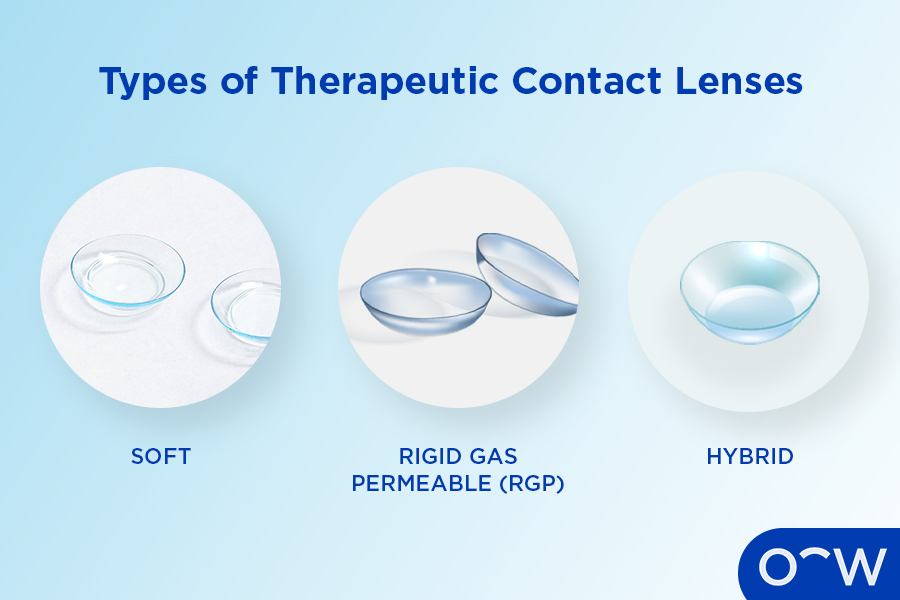
The different types of therapeutic contact lenses available include soft, rigid gas permeable and hybrid. Bandage contact lenses are available in a variety of materials, shapes and sizes to cater to different needs. An eye care professional will select ones that are most suitable for your condition. The different types of therapeutic contact lenses are listed below.
- Soft: Soft therapeutic contact lenses are the most commonly chosen form and have many different types that are Health Canada-approved.
- Rigid Gas Permeable: Rigid gas permeable contact lenses have two categories, which include corneal lenses and scleral lenses. They are constructed from a breathable, rigid material that maintains its shape regardless of any corneal irregularities or impairments, providing a smooth surface for clearer vision.
- Hybrid: Hybrid therapeutic lenses, also known as contact lens combinations, are created when a rigid gas permeable lens is needed for clear vision but is uncomfortable. Hybrid therapeutic lenses combine the benefit of providing good vision and sturdiness with the comfort of soft contact lenses, according to Keratoconus Canada.
How Long Should a Bandage Contact Lens Stay in the Eyes?
How long a bandage contact lens should stay in the eyes is determined entirely by an eye care practitioner, as this timeline will vary depending on the severity of your condition and the required recovery time. For many common conditions, bandage contact lenses may only need to remain in the eye for a few days to a couple of weeks, with frequent check-ups to monitor healing. While bandage contact lenses are highly effective at creating the ideal conditions for the cornea to fully recover, they require strict clinical oversight. You should always consult your healthcare provider first if you believe your eyes require medical attention or monitoring.
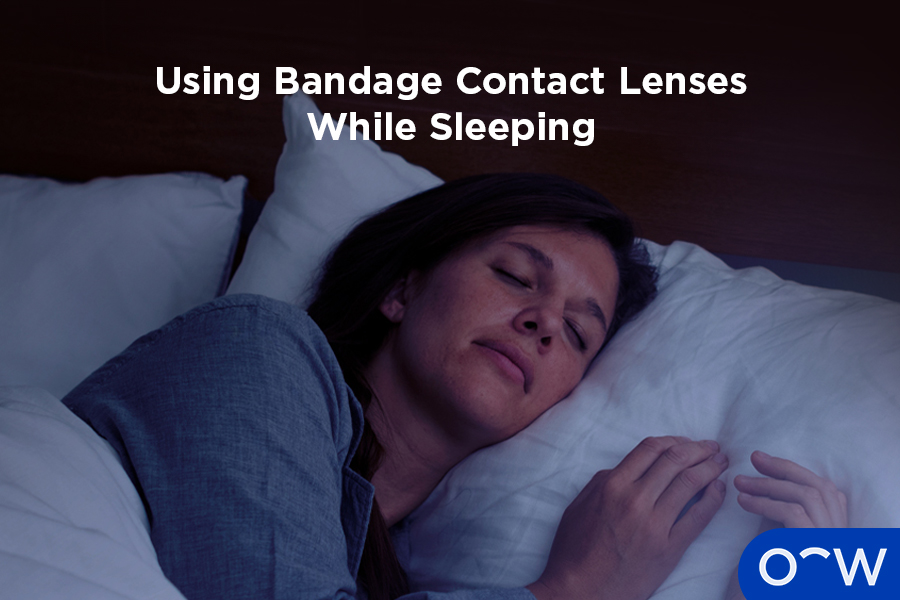
Can I Sleep With a Bandage Contact Lens?
Yes, you can sleep with bandage contact lenses, provided you are under the direct supervision of an eye care professional. Most bandage contact lenses are made to be worn overnight and continuously until your eye condition improves. They are helpful in retaining moisture in the eye and providing comfort; therefore, they are appropriate for wearing while sleeping.
What are the Benefits of Using Therapeutic Contact Lenses?
The benefits of using therapeutic contact lenses are pain relief, hydration of the corneal epithelium and encouraging corneal wound healing. Therapeutic contact lenses help alleviate pain and discomfort as they help to reduce friction during blinking. They keep the corneal epithelium hydrated as they assist with improving stability of the eye’s tear film and provide protection for the eye from external threats from the environment.
What Are the Risks and Side Effects Associated with Therapeutic Contact Lenses?
The risks and side effects associated with therapeutic contact lenses may include blepharitis, conjunctivitis and keratitis. It is important to note that these risks and/or side effects may occur as a result of insufficient cleaning and that follow-up monitoring and proper fit are vital to a safer experience when using therapeutic contact lenses. The risks and side effects associated with therapeutic contact lenses are listed below.
- Blepharitis: Blepharitis is an eye condition that leads to inflammation of the eyelids as a result of bacteria or from oil gland issues. Blepharitis can present symptoms such as swelling, red eyes, crusted discharge and a burning sensation.
- Conjunctivitis: Conjunctivitis is an infection or inflammation of the conjunctiva, which is the clear membrane that sits in front of the sclera of the eye and the inner eyelids. Symptoms can include tearing, redness, discharge, stinging eyes, itchiness and light sensitivity.
- Keratitis: Keratitis is defined as inflammation or infection of the cornea caused by bacteria, viruses or injuries. Symptoms of keratitis can include pain, redness, excessive tears, sensitivity to light and blurry vision.
How are Therapeutic Contact Lenses Prescribed?
Therapeutic contact lenses may be prescribed by an ophthalmologist or optometrist during the management or recovery phase of various ocular surface diseases. An eye care professional may prescribe therapeutic contact lenses to aid with your eye condition depending on its severity, which requires an initial eye examination from an optometrist first.
What are the Considerations for Long-Term Use of Therapeutic Contact Lenses?
The considerations for long-term use of therapeutic contact lenses are regular follow-up examinations, as patients who may be using therapeutic contact lenses long-term need to monitor for potential complications. Long-term use of therapeutic contact lenses can pose risks of developing infections in the eye, such as keratitis, conjunctivitis and blepharitis.
What is the Difference Between Therapeutic Contact Lenses and Regular Contact Lenses?
The difference between therapeutic contact lenses and regular contact lenses is primarily that therapeutic contact lenses are used as a therapeutic treatment for an eye condition, whereas regular contact lenses are used for correcting refractive error. Therapeutic contact lenses may have specific properties like increased water content or breathability versus a regular contact lens.
Is Your Vision Blurry While Using a Bandage Contact Lens?
Yes, your vision can be blurry while using a bandage contact lens, and it may also be blurry as a result of your eye condition or from post-surgery. Blurred vision may also develop after taking your bandage contact lenses off; however, this should alleviate on its own after a few days.
Read Bandage Contact Lens (Therapeutic Contact Lenses): Types, Benefits and Risks in other Oscar Wylee regions and their languages.
Canada